How Much Does an Energy Saving Window Upgrade Cost? A Practical Guide for Homeowners
If you’re like me, you’ve probably stared at a drafty window in January and wondered whether the energy saving window upgrade cost is worth it. I’ve been there—standing in my Columbus living room, feeling the cold air seep through single-pane glass, holding a utility bill that made me wince. After upgrading three houses worth of windows (some DIY, some hired out), I’ve got a solid handle on what you’ll actually pay and whether it’s money well spent. Let’s break down the numbers.
What Drives the Energy Saving Window Upgrade Cost?
The price tag for an energy saving window upgrade can range from pretty reasonable to “wait, for one window?” It depends on a few key factors. Frame material is the biggest one—vinyl is budget-friendly ($300–$600 per window installed), while fiberglass or wood-clad can push $800–$1,200. Then there’s the glass itself: double-pane with low-E coating is standard, but triple-pane or gas-filled panes add $100–$200 each. Your location matters, too. Here in Ohio, I’m not in the highest-cost market, but labor rates in bigger cities can run 20–30% more. And don’t forget the number of windows—most quotes drop the per-unit price if you do a whole house (say 10+ windows).
Average Price Ranges for Different Window Types
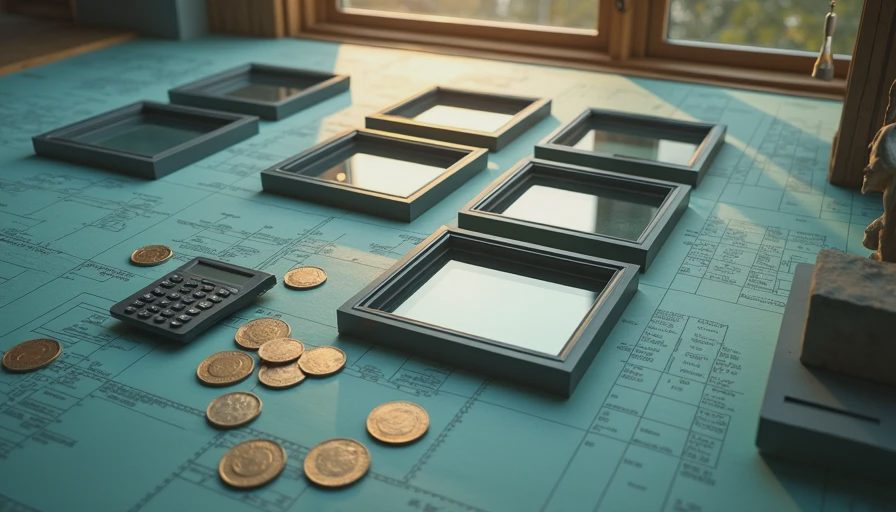
To give you a clearer picture, here’s what I’ve seen for a standard double-hung window, installed, in the Midwest. For a mid-range vinyl double-pane with low-E, expect $450–$700 per window. If you go with a good brand like Andersen or Pella in wood or fibreglass premium series, you’re looking at $800–$1,200. Triple-pane, which I installed in my own bedroom because the noise reduction mattered, runs $600–$900 for vinyl, or $1,000–$1,500 for premium materials. And if you’re replacing a big picture window or slider, tack on 50%–75% more.
Keep in mind that the national average price per window for a full energy-saving replacement is around $650, according to remodeling industry data. That’s a ballpark—I’ve paid $480 for a builder-grade vinyl unit and $1,100 for a casement window that didn’t even include installation. Always get three quotes and compare apples to apples. Check the NFRC label (National Fenestration Rating Council) for U-factor and solar heat gain coefficient—those numbers matter more than the sales pitch.

DIY Options vs. Professional Installation
If your budget is tight, there are ways to bring the energy saving window upgrade cost down. I’ve replaced a few windows myself—it’s not as hard as you think if you have basic carpentry skills and a helper. A DIY vinyl window kit might cost $200–$400, and you save the $150–$300 per window installation fee. But be honest with yourself: if your house is older, framing might be out of square, and a bad seal will ruin your energy savings. I learned that the hard way on my first house—the window looked fine but leaked air like a sieve because I skimped on flashing.
For most people, I’d recommend hiring a pro for full replacements, especially if you want the warranty and proper installation. The energy saving window upgrade cost with labor averages $600–$800 per window for a decent vinyl unit. That’s real money, but the right install seals the deal. If you’re handy and replace just a few windows yourself, you can pocket $500–$1,000.
Rebates, Tax Credits, and Long-Term Savings
This is where the math gets better. The federal tax credit for energy-efficient windows is back (thanks to the Inflation Reduction Act)—you can get 30% of the cost back, up to $600 per year. Many states and utilities also offer rebates. In Ohio, my local utility gave me $50 per window for ENERGY STAR certified units. Stack those and your effective cost drops 20–40%.
What about your heating and cooling bills? A well-sealed, double-pane low-E window can cut energy loss by 25–30% compared to single-pane. On my current house, I replaced 12 windows and saved about $300/year on combined bills. That means payback in 10–15 years, but you also get quieter rooms, fewer drafts, and a higher home resale value. If you’re planning to stay put for a while, the energy saving window upgrade cost pays for itself.
Sam’s Take: Is It Worth the Investment?
I’ve been through this three times now. Here’s my honest take: if your windows are single-pane or visibly drafty, upgrade. But don’t go overboard on premium glass unless you live where it’s really hot or really cold—double-pane low-E is good enough for most places. Focus on sealing and proper installation over fancy frames. A mid-grade vinyl window installed correctly will give you 90% of the benefit at half the cost of high-end wood.
One more thing: before you replace every window, do a quick blower door test with a smoke pencil to find your worst leaks. Often, just swapping out the leakiest 4–6 windows gives you the bulk of savings at a fraction of the total cost. Don’t let a contractor talk you into a whole-house replacement if you’re on a budget.
In the end, the energy saving window upgrade cost is an investment that pays back in comfort, lower bills, and fewer drafts. Do your homework, get multiple quotes, and don’t feel pressured to go top-of-the-line. Your wallet—and your winter toes—will thank you.
— Sam, an ordinary homeowner still struggling with the house.




No letters yet — pray write the first.