If you have ever stared at three contractor quotes that all claim to cover the same job but somehow land thousands of dollars apart, welcome to the club. I’ve already dealt with this problem for you. The frustrating part is that bad contractor quotes do not always look bad at first glance. Sometimes the most expensive bid is the clearest one. Sometimes the cheapest one is basically a handshake with a number attached. If you want to protect your budget, avoid change-order drama, and actually compare apples to apples, you need to know what belongs in a real quote and what should make you pause.
What a good quote should actually include
A useful quote is not just a total price at the bottom of a page. It should break out labor, materials, scope, and any known allowances in plain English. If a contractor is replacing flooring, for example, the quote should say whether demolition, subfloor prep, disposal, trim reset, and moving furniture are included. If it just says “install new floor — $7,800,” that is not enough detail to trust.
This is where a lot of homeowners get trapped. One bid looks cheap because it excludes prep work. Another includes everything but looks high. The third sounds friendly and promises to “figure it out as we go,” which is exactly how budgets get blown up. I want to see room counts, material assumptions, brand or grade notes, and a payment schedule tied to milestones, not vague promises.
A good quote also tells you what is not included. That matters just as much. If permit fees, painting, finish carpentry, or dumpster costs are excluded, that should be stated clearly. Don’t worry, it’s not expensive to ask for this level of detail. The money saved is enough to buy a case of beer.

Why quote prices vary so much
When homeowners compare contractor quotes, they often assume one contractor is honest and the others are trying to get rich. Sometimes that is true. More often, the bids are built on different assumptions. One contractor may price premium materials, a larger crew, and tighter scheduling. Another may use lower-cost materials, fewer workers, and expect delays between phases.
Overhead matters too. A bigger company with office staff, insurance, dedicated project management, and polished systems will usually charge more than a solo operator. That does not automatically make the bigger company a ripoff. It may mean better communication, better scheduling, and less chance that your kitchen sits torn apart for three extra weeks.
The real issue is whether the quote explains the difference. If one bathroom remodel bid is $12,000 and another is $21,000, ask what each includes for waterproofing, tile prep, fixture installation, debris removal, and finish work. Ask about who is doing the work and whether subcontractors are involved. Good contractor quotes make those answers easier to see before the job starts, not after you’ve signed.
Red flags that usually lead to expensive surprises
The biggest red flag is vagueness. If a quote says “remodel bathroom” or “repair water damage” without a scope line by line, you are walking into a future argument. Another bad sign is a contractor who refuses to put material details in writing. If they say the exact product “doesn’t matter,” it probably matters.
Watch for giant deposits too. For many jobs, a reasonable deposit covers scheduling, initial materials, or special-order items. A demand for half or more upfront, especially in cash, should make you slow down. The same goes for quotes that are dramatically lower than the rest. There is usually a reason, and that reason often shows up later as change orders, rushed labor, or unfinished punch-list work.

I also get nervous when the payment schedule is disconnected from progress. You want stages that make sense: deposit, demo completed, rough work completed, final installation, final walkthrough. If the contractor gets most of the money before most of the work is done, your leverage disappears. Don’t trust those marketing accounts that tell you everything will be seamless just because the truck lettering looks nice.
How to compare contractor quotes the right way
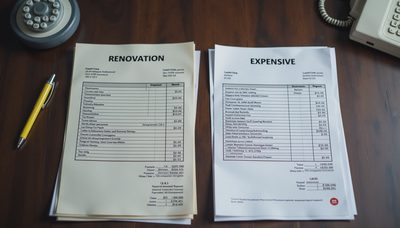
Here’s the method I wish I had used sooner: build your own comparison sheet. Put each contractor across the top and list the major scope items down the side. Demo, hauling, framing, electrical, plumbing, drywall, flooring, trim, painting, permits, cleanup, warranty. Then fill in what each quote actually includes.
This does two things fast. First, it shows whether the prices are truly for the same job. Second, it exposes suspicious blanks. If one bid leaves out disposal, finish paint, or permit handling, you can see the missing cost immediately instead of learning about it halfway through the project.
Also ask every contractor the same follow-up questions. What assumptions are built into this price? What could trigger a change order? What products are included at this number? Who is supervising the work daily? How long will the job take once started? Good contractor quotes hold up under specific questions. Weak ones start wobbling right away.
How to use quotes to negotiate without becoming a nightmare client
You do not need to play hardball or wave a cheaper bid around like a weapon. The smarter move is to ask for scope clarity and options. If a quote is too high, ask what line items could be changed to reduce cost without hurting the result. Maybe you keep the better underlayment but switch to a less expensive fixture package. Maybe you handle painting yourself after the pro work is done. That is practical negotiating.
I would rather hire a contractor who gives a solid, detailed $14,500 quote than a charming one with a fuzzy $11,000 quote. Clear numbers are easier to manage than vague promises. If two bids are close, I lean toward the contractor who communicates well, explains the work plainly, and puts the details in writing.
At the end of the day, contractor quotes are not just prices. They are early previews of how the job will go. If the quote is sloppy, the project often gets sloppy too. Slow down, compare the details, ask dumb-sounding questions, and protect your wallet before demo day. — Sam, an ordinary homeowner still struggling with the house.



No letters yet — pray write the first.